
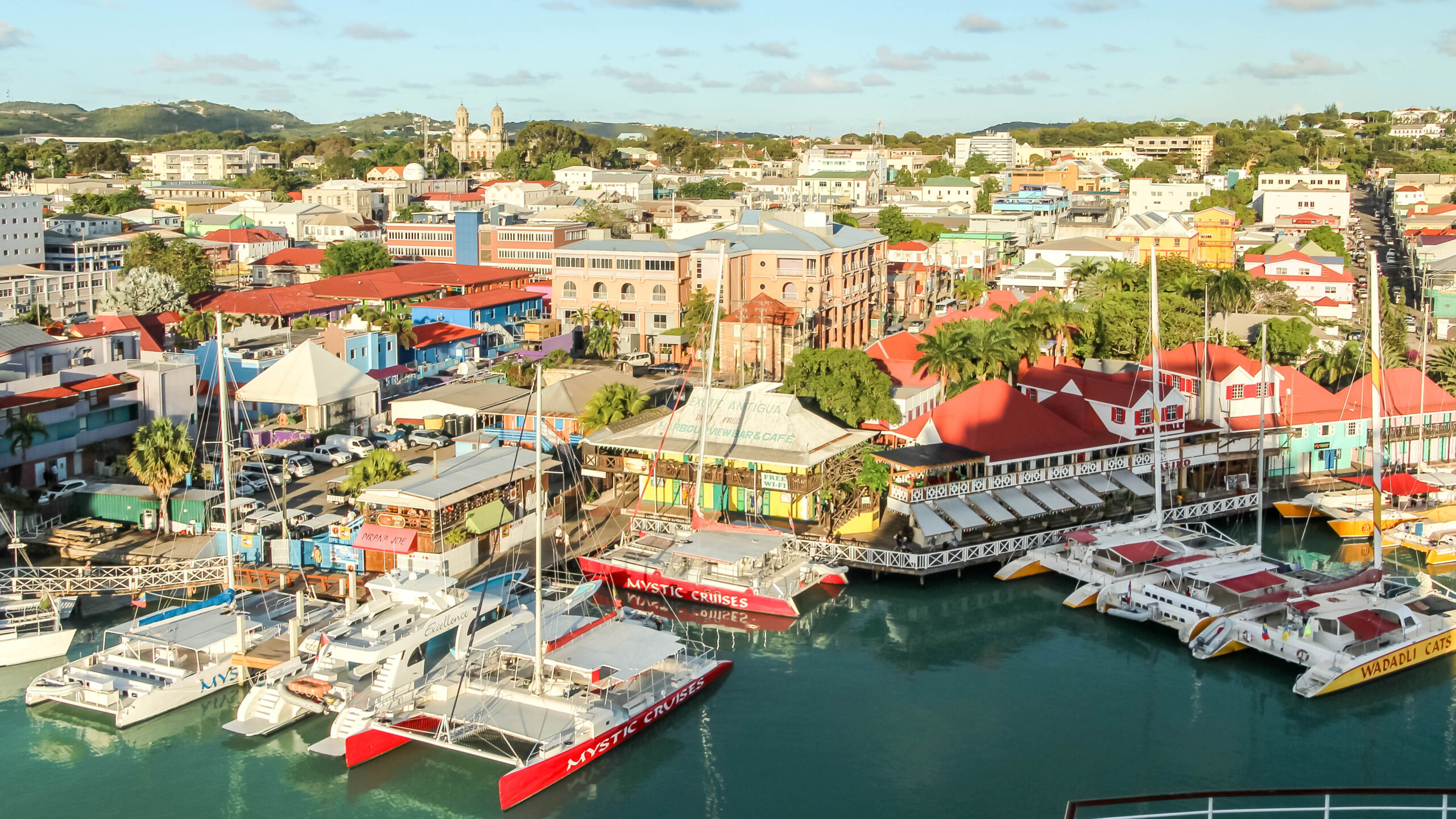
ST JOHN’S, Antigua and Barbuda — The Commonwealth Heads of Government Meeting has brought leaders and delegates to Antigua and Barbuda for a four-day summit running from 1 to 4 November. As the meeting continues on Nov. 3, its central question is practical: can a diverse association turn broad commitments on climate resilience, trade and investment into cooperation that member states can measure?
The official theme is “Accelerating Partnerships and Investment for a Prosperous Commonwealth.” The Commonwealth says the meeting is convening heads of government, ministers and representatives from business, civil society and youth organisations. Its agenda names climate resilience, trade, innovation, equality and sustainable development. These are wide fields; the value of the meeting will depend less on the wording of the theme than on the decisions, funding and follow-up that emerge.
A 56-nation forum with a broad agenda
The scale helps explain both the attraction and the challenge. The association comprises 56 independent countries across Africa, Asia, the Caribbean and the Americas, Europe and the Pacific. The Commonwealth’s summit information says 2.7 billion people live in member countries, and more than 60 percent are aged 29 or under. It also counts 33 of the world’s 42 small states among its members. A shared forum can give smaller states a route to coordinate their concerns, but member governments still have different economic interests and political priorities.
Climate resilience and small states
For island and coastal states, climate resilience is not an abstract diplomatic phrase. It touches infrastructure, insurance, public services, water security and the cost of recovering from extreme weather. The summit’s host country sits in the Caribbean, a region in which small states often seek stronger access to climate finance and a larger role in setting the terms of international support. The Commonwealth’s public agenda includes resilience and sustainable development, although the summit page alone does not establish that leaders have agreed to any new funding or binding climate target.
Investment commitments need scrutiny
Trade and investment form the other prominent part of the stated agenda. The Commonwealth’s website projects combined gross domestic product for its members at US$19.5 trillion by 2027. That is an aggregate forecast, not a measure of how evenly economic gains are shared or proof that a summit initiative will attract capital. A useful assessment would ask which projects are ready for financing, who bears the risk, what safeguards apply and whether smaller economies can access the opportunities.
Diplomacy must lead to delivery
The meeting also takes place amid wider geopolitical pressure. The Associated Press reported that leaders were gathering during global political turbulence, with expected discussions spanning climate justice, freedom of expression and vulnerable groups. Those themes show the forum’s breadth, but they can also expose disagreement. A declaration may preserve consensus by using general language; its readers should distinguish such language from a funded programme, a timetable or a change in national law.
A summit is only one stage in a longer policy process. Governments can use it to announce partnerships, set common principles and ask the Commonwealth Secretariat to coordinate further work. Delivery then depends on domestic budgets, agencies and political choices after leaders fly home. Businesses and civil society can contribute expertise, but their participation does not substitute for public accountability. The public record should identify the responsible institution, the resources committed and the date by which progress will be reviewed.
That test matters especially for younger people, who make up a large share of the Commonwealth’s population. The official programme includes youth participation, but representation at a meeting does not automatically mean that young people shape final decisions. A meaningful outcome would show how their proposals enter policy and how they can track implementation. The same principle applies to communities exposed to climate risks: consultation has value only if it can influence priorities and budgets.
What readers should watch
As proceedings continue, the evidence to watch is concrete: the text of any leaders’ communiqué, named investment or resilience projects, financing terms, and mechanisms for reporting progress. A pledge without a responsible body or funding source is difficult to evaluate. Conversely, a modest programme with transparent milestones may be more consequential than a sweeping declaration. The Commonwealth’s own description provides a clear list of priorities against which outcomes can be compared.
The summit’s immediate significance is therefore not that 56 governments share one position on every issue. It is that they have a forum in which to identify shared interests and negotiate cooperation across regions with unequal resources. Whether Antigua becomes a turning point can only be judged after the meeting, by looking at what was agreed and what is implemented. As of Nov. 3, the discussions were still under way; this account does not assume that any final decision has already been taken.
[Interview needed: a Caribbean climate-finance specialist and a youth representative on whether the announced outcomes address local priorities.]
What to watch after the meeting
The remaining programme can still shape how the summit is understood. The official CHOGM schedule lists sessions on blue finance and innovation, and on safeguarding democracy and inclusion in the Commonwealth for Nov. 3. Those subjects connect the large headline themes to more specific policy areas. Blue finance concerns investment tied to oceans and coastal economies; the exact proposals and financial commitments, if any, should be checked against the published meeting record rather than inferred from the session title. A democracy discussion likewise does not mean governments have agreed on a single standard or enforcement mechanism.
After the leaders depart, a useful follow-up will compare the final communiqué with earlier promises and identify which institutions are responsible for delivery. Independent reporting from the host country can test whether local businesses, youth groups and climate-vulnerable communities consider the announced initiatives accessible. The official page provides the dates, venue, member count and stated priorities; it does not by itself document implementation. That distinction lets readers hold the summit to account without dismissing diplomacy that may produce gradual cooperation.
That means the strongest measure of success will be follow-through, not ceremony. The Commonwealth Secretariat and participating governments can publish a short progress tracker that names each commitment, funding source, delivery agency and review date. A public tracker would also make it easier for civil society to compare promises with results. Without that record, readers may know that leaders endorsed a broad direction but have little way to establish whether money reached a project or whether vulnerable communities benefited.